


Flow Chemistry Innovation: AM Technology and HydRegen Secure Innovate UK Funding for Continuous Biocatalytic Hydrogenation
Last Updated: 2nd June 2026
As pharmaceutical manufacturers seek to improve efficiency, strengthen supply chains and reduce environmental impact, flow chemistry is increasingly emerging as a key enabling technology. Continuous processing offers the potential to transform traditional manufacturing approaches by improving safety, reducing waste and delivering more agile production capabilities.

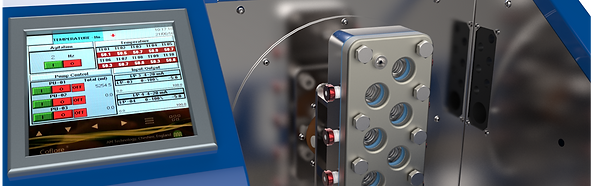
AM Technology is pleased to announce that it has been awarded £0.9m Innovate UK funding alongside HydRegen for the collaborative project, "Biocatalytic nitro-reductions in scalable continuous flow reactors: paracetamol case study.", nicknamed "GREENAMINE" The two year project, starting in October 2023, will explore the integration of HydRegen's innovative biocatalytic hydrogenation technology within AM Technology's Coflore® continuous flow reactor platform, demonstrating how biocatalysis and continuous manufacturing can work together to address important challenges in pharmaceutical production.
For organisations involved in drug substance manufacturing, the project represents an exciting opportunity to evaluate a manufacturing approach that combines enhanced process safety, improved sustainability and scalable production performance.
Advancing Hydrogenation Through Biocatalysis and Flow Chemistry
Hydrogenation is one of the most widely used reaction classes in pharmaceutical and fine chemical manufacturing. From active pharmaceutical ingredients (APIs) to key intermediates, hydrogenation reactions play a critical role in many synthetic routes.
However, conventional hydrogenation processes are often performed in large batch reactors operating under elevated hydrogen pressures. These legacy systems require significant inventories of hydrogen gas and substantial reactor volumes, creating operational and safety challenges that must be carefully managed.
The Innovate UK-funded project seeks to investigate an alternative approach by combining HydRegen's enzyme-enabled hydrogenation technology with AM Technology's dynamically mixed Coflore® reactor technology.
The initial case study will focus on biocatalytic nitro reduction chemistry relevant to the manufacture of paracetamol, one of the world's most widely used pharmaceutical compounds.
Why Continuous Manufacturing Matters
Across the pharmaceutical sector, manufacturers continue to evaluate opportunities to transition selected processes from batch production to continuous operation.
Continuous manufacturing offers several potential advantages:
Enhanced process control through steady-state operation
Reduced manufacturing footprint
Improved scalability
Lower waste generation
More efficient use of raw materials and energy
Increased manufacturing flexibility
Industry studies have shown that continuous manufacturing can deliver waste reductions of up to 33%, facility footprint reductions of approximately 50%, and carbon dioxide emissions reductions of up to 80% compared with conventional batch processing approaches.
These benefits align closely with the pharmaceutical industry's broader sustainability goals while supporting efforts to improve manufacturing resilience and productivity.
For companies evaluating future production strategies, continuous processing is increasingly being viewed not simply as an alternative manufacturing method, but as a strategic capability that can support long-term competitiveness.
Improving Safety Through Reduced Hydrogen Inventory
One of the most significant advantages of applying flow chemistry to hydrogenation processes is the reduction in hydrogen inventory present within the system at any given time.
In traditional batch hydrogenation, large reactor volumes may contain substantial quantities of hydrogen under pressure. Reducing the amount of hydrogen held within the process, through switching to a continuous flow reactor, offers significant risk mitigation opportunities.
The Coflore® flow reactor platform operates with significantly smaller reactor volumes compared with conventional batch equipment. As a result, the total inventory of high-pressure hydrogen present within the process is greatly reduced.
For pharmaceutical manufacturers, this can provide several advantages:
Enhanced Process Safety
Smaller process inventories reduce the quantity of hazardous material present at any moment, supporting inherently safer process design principles.
Easier Scale-Up
Rather than increasing reactor volume, production capacity can be increased through extended operating periods or reactor numbering-up strategies, maintaining the safety advantages associated with smaller reactor volumes.
Improved Process Control
Continuous operation enables tighter control of reaction conditions, helping manufacturers achieve consistent product quality and reproducible performance.
As regulators and manufacturers increasingly prioritise process safety and operational excellence, these advantages continue to drive interest in continuous hydrogenation technologies.
Demonstrating Long-Term Process Stability
While laboratory-scale demonstrations are important, industrial adoption ultimately depends upon the ability of a process to operate reliably over extended production periods.
A key objective of the Innovate UK project is therefore to demonstrate that biocatalytic hydrogenation can be successfully integrated into a scalable continuous manufacturing environment.
During the project, the Coflore® reactor system will operate the biocatalytic hydrogenation process continuously for an extended period of one week. This extended run will provide encouraging evidence of the compatibility between the biocatalytic system and continuous flow processing. Update Following Project Completion: The Coflore system was operating for an extended period of greater than one week at HydRegen's facility without issue.
Long-duration operation is particularly important for pharmaceutical manufacturers, where process robustness, reproducibility and reliability are essential requirements for commercial implementation.
The ability to sustain performance over extended periods supports the broader objective of translating innovative laboratory chemistry into practical manufacturing solutions.
The Role of Advanced Engineering in Pharmaceutical Innovation
The pharmaceutical industry's future manufacturing challenges cannot be solved through chemistry alone.
Successful implementation of next-generation manufacturing technologies requires the integration of chemistry, biocatalysis, process engineering and reactor design. This project exemplifies how collaboration between technology developers can accelerate innovation by combining complementary expertise.
HydRegen brings specialist knowledge in enzyme-enabled hydrogenation, while AM Technology contributes decades of experience in continuous reactor design and process intensification. Together, the partners aim to demonstrate how advanced engineering solutions can unlock new opportunities for sustainable pharmaceutical manufacturing.
The project also highlights the growing importance of collaborative innovation programmes supported by organisations such as Innovate UK, which play an important role in helping promising technologies progress towards commercial deployment.
Looking Ahead
As pharmaceutical manufacturers continue to pursue safer, more sustainable and more efficient production methods, the combination of biocatalysis and flow chemistry offers significant promise.
The Innovate UK-funded collaboration between AM Technology and HydRegen will investigate how continuous biocatalytic hydrogenation can be implemented within scalable manufacturing environments, using a commercially relevant paracetamol case study as a demonstration platform.
By combining the benefits of continuous manufacturing, reduced hydrogen inventory, process intensification and advanced engineering, the project aims to contribute to the development of future-ready manufacturing technologies for the pharmaceutical sector.
AM Technology looks forward to working with HydRegen and Innovate UK throughout the programme and sharing further developments as the project progresses.
Further Information
To learn more about how Coflore® continuous flow reactor technology can support hydrogenation, process intensification and pharmaceutical manufacturing applications, contact the AM Technology team through our contact form here.

